Buy harnn.eu ?
We are moving the project
harnn.eu .
Are you interested in purchasing the domain
harnn.eu ?
domain@kv-gmbh.de · 0541-91531010
Buy harnn.eu ?
What is correct: peptide bond?
A peptide bond is a covalent bond that forms between the carboxyl group of one amino acid and the amino group of another amino acid during protein synthesis. This bond is formed through a condensation reaction, where a molecule of water is removed. The resulting bond is a strong and stable linkage that holds the amino acids together in a protein chain. Therefore, the correct term is "peptide bond" to describe this specific type of covalent bond between amino acids. **
What is the bond angle in a peptide bond?
The bond angle in a peptide bond is approximately 120 degrees. This angle is due to the partial double bond character of the peptide bond, which is formed between the carbonyl carbon of one amino acid and the nitrogen of another amino acid. The resonance structure of the peptide bond results in a planar arrangement of the atoms, leading to the bond angle of approximately 120 degrees. **


Similar search terms for Peptide bond
Top-Angebote
Products related to Peptide bond:
-
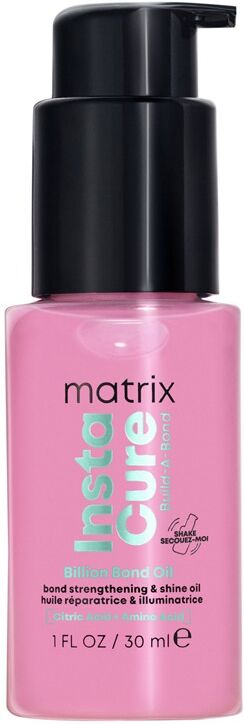
Matrix Instacure Build-A-Bond Billion Bond Oil 30mlTransform damaged hair with Matrix Instacure Build-A-Bond Billion Bond Oil, the ultimate bond-strengthening and shine oil designed for billion-dollar hair care. This professional, fast-acting leave-in formula visibly reverses signs of damage, boasting the power of 1 Billion Bonds in every single drop. Formulated with 1% Citric Acid to strengthen hair bonds and Amino Acid to reinforce the inner hair matrix, this lightweight gel serum offers clean shine and the refreshing feel of a fresh cut, while significantly reducing the visibility of split ends. Approved by Pros, the vegan formula features the delicate scent notes of Caring Peonies and Summer Lemons. For best results, apply the oil in two stages: on damp hair for a protective layer, and again on dry hair to achieve that final, clean, radiant shine. Ingredients: Isododecane, Dipropylene Glycol, Aqua / Water, Dimethicone, Alcohol Denat., Glycerin, Dimethiconol, PEG-14 Dimethicone, Hydroxyethyl Urea, Parfum / Fragrance, Citric Acid, Phenoxyethanol, Polyacrylamide, PEG-60 Hydrogenated Castor Oil, Carvone, Limonene, C13-14 Isoalkane, Sodium Citrate, Arginine, Citrus Aurantium Peel Oil, Linalool, Laureth-7, Propylene Glycol, Pinene, Citronellol, Benzyl Alcohol, Citral, Benzaldehyde, Terpinolene, Geranyl Acetate, Pentaerythrityl Tetra-Di-T-Butyl Hydroxyhydrocinnamate, CI 17200 / Red 33, CI 19140 / Yellow 5 (F.I.L. Z70063553/1).15,47 £*Shipping: 2,95 £Secure redirect to the provider
-
What is the difference between a peptide bond and an ester bond?
A peptide bond is a covalent bond formed between the carboxyl group of one amino acid and the amino group of another amino acid, linking them together in a protein chain. On the other hand, an ester bond is a covalent bond formed between a carboxylic acid and an alcohol, resulting in the formation of an ester molecule. Peptide bonds are specific to proteins, while ester bonds are commonly found in lipids, such as fats and oils. Additionally, peptide bonds are involved in the primary structure of proteins, determining their sequence, while ester bonds are important for the structure and function of lipids. **
-
What are the differences between a glycosidic bond, a peptide bond, and an ester bond?
Glycosidic bonds are formed between a sugar molecule and another molecule, such as another sugar or a non-carbohydrate compound. Peptide bonds are specific types of covalent bonds that link amino acids together in proteins. Ester bonds are formed between a carboxylic acid and an alcohol, resulting in the formation of an ester. Each of these bonds plays a crucial role in the structure and function of biological molecules, with glycosidic bonds being important in carbohydrates, peptide bonds in proteins, and ester bonds in lipids. **
-
Can you explain the formation of a peptide bond?
A peptide bond is formed through a condensation reaction between the carboxyl group of one amino acid and the amino group of another amino acid. During this reaction, a molecule of water is released. The carbon atom of the carboxyl group forms a covalent bond with the nitrogen atom of the amino group, resulting in the formation of a peptide bond. This process is catalyzed by enzymes called ribosomes. Multiple peptide bonds can be formed between amino acids to create a polypeptide chain. **
-
How is the formation of a peptide bond carried out?
The formation of a peptide bond is carried out through a condensation reaction between the carboxyl group of one amino acid and the amino group of another amino acid. During this process, a molecule of water is removed, and the two amino acids are joined together by a covalent bond, forming a dipeptide. This reaction is catalyzed by an enzyme called peptidyl transferase, which is found in the ribosome. The newly formed peptide bond is essential for the synthesis of proteins and plays a crucial role in the structure and function of biological molecules. **
What is a peptide bond, peptide chain, peptide group, di-, tri-, and polypeptide? Can you please explain this briefly and simply? Thank you.
A peptide bond is a chemical bond that forms between the carboxyl group of one amino acid and the amino group of another amino acid. When multiple amino acids are linked together by peptide bonds, they form a peptide chain. A peptide group refers to a group of amino acids linked together by peptide bonds. A dipeptide is a chain of two amino acids, a tripeptide has three amino acids, and a polypeptide is a chain of many amino acids linked together. These chains of amino acids are the building blocks of proteins. **
How can I recognize in this peptide bond that it consists of two amino acids?
In a peptide bond, two amino acids are joined together through a condensation reaction between the carboxyl group of one amino acid and the amino group of another amino acid. This results in the formation of a covalent bond between the carbon atom of the carboxyl group and the nitrogen atom of the amino group. The presence of this specific bond between the two amino acids is a characteristic feature of a peptide bond, allowing us to recognize that it consists of two amino acids. **
Top-Angebote
Products related to Peptide bond:
-
Skinlick Peptide Gloss Bond Repair Mask Deep Repair 150mLA hair mask. Peptide Gloss Bond Repair Mask is designed to transform dry, damaged, chemically treated, or heat-stressed hair into silky, healthy locks. This advanced hair mask utilizes bonding technology, biomimetic peptides, and hydrolyzed rice protein to deeply repair and restore hair structure, enhancing shine and smoothness.14,03 £*Shipping: 5,34 £Secure redirect to the provider
-
Schwarzkopf BlondMe Bond Repair Nourishing Shampoo 300ml & Bond RepairThe Schwarzkopf BlondMe Bond Repair Nourishing Shampoo & Conditioner Duo is the ultimate haircare set designed for blonde hair. This duo includes: BlondMe Bond Repair Nourishing Shampoo (300ml) – A formula that gently cleanses while strengthening and repairing the internal hair bonds. It helps maintain vibrant blonde tones, reducing breakage and leaving hair soft, smooth, and nourished. BlondMe Bond Repair Nourishing Conditioner (250ml) – A deeply conditioning treatment that replenishes moisture, detangles, and reinforces hair structure. Enriched with advanced bonding technology, it restores elasticity and shine, making blonde hair more resilient and luminous. Ideal for all blonde shades, this duo protects against damage, enhances colour longevity, and ensures healthy, radiant-looking hair. Shampoo: AQUA / WATER • SODIUM C14-16 OLEFIN SULFONATE • COCAMIDE MEA • GLYCERIN • COCAMIDOPROPYL BETAINE • GLYCOL DISTEARATE • SODIUM LAUROYL SARCOSINATE • HEXYLENE GLYCOL • PARFUM / FRAGRANCE • CITRIC ACID • SODIUM HYDROXIDE • SODIUM CHLORIDE • SODIUM BENZOATE • PEG-55 PROPYLENE GLYCOL OLEATE • PROPYLENE GLYCOL • COCO-BETAINE • HYDROXYPROPYL GUAR HYDROXYPROPYLTRIMONIUM CHLORIDE • CARBOMER • SALICYLIC ACID • LIMONENE • BENZOIC ACID • ROSA CANINA SEED OIL • TOCOPHEROL • POLYQUATERNIUM-7 • GLYCOLIC ACID • LINALOOL • HEXYL CINNAMAL (F.I.L. Z70044886/1). Conditioner: AQUA / WATER • CETEARYL ALCOHOL • ELAEIS GUINEENSIS OIL / PALM OIL • BEHENTRIMONIUM CHLORIDE • GLYCERIN • PARFUM / FRAGRANCE • ISOPROPYL ALCOHOL • STEARAMIDOPROPYL DIMETHYLAMINE • CAPRYLYL GLYCOL • BENZOIC ACID • LIMONENE • ROSA CANINA SEED OIL • TOCOPHEROL • GLYCOLIC ACID • LINALOOL (F.I.L. Z70045026/1).39,96 £*Shipping: 0,00 £Secure redirect to the provider
-
Matrix Instacure Build-A-Bond Billion Bond Oil 30mlTransform damaged hair with Matrix Instacure Build-A-Bond Billion Bond Oil, the ultimate bond-strengthening and shine oil designed for billion-dollar hair care. This professional, fast-acting leave-in formula visibly reverses signs of damage, boasting the power of 1 Billion Bonds in every single drop. Formulated with 1% Citric Acid to strengthen hair bonds and Amino Acid to reinforce the inner hair matrix, this lightweight gel serum offers clean shine and the refreshing feel of a fresh cut, while significantly reducing the visibility of split ends. Approved by Pros, the vegan formula features the delicate scent notes of Caring Peonies and Summer Lemons. For best results, apply the oil in two stages: on damp hair for a protective layer, and again on dry hair to achieve that final, clean, radiant shine. Ingredients: Isododecane, Dipropylene Glycol, Aqua / Water, Dimethicone, Alcohol Denat., Glycerin, Dimethiconol, PEG-14 Dimethicone, Hydroxyethyl Urea, Parfum / Fragrance, Citric Acid, Phenoxyethanol, Polyacrylamide, PEG-60 Hydrogenated Castor Oil, Carvone, Limonene, C13-14 Isoalkane, Sodium Citrate, Arginine, Citrus Aurantium Peel Oil, Linalool, Laureth-7, Propylene Glycol, Pinene, Citronellol, Benzyl Alcohol, Citral, Benzaldehyde, Terpinolene, Geranyl Acetate, Pentaerythrityl Tetra-Di-T-Butyl Hydroxyhydrocinnamate, CI 17200 / Red 33, CI 19140 / Yellow 5 (F.I.L. Z70063553/1).15,47 £*Shipping: 2,95 £Secure redirect to the provider
-
What is correct: peptide bond?
A peptide bond is a covalent bond that forms between the carboxyl group of one amino acid and the amino group of another amino acid during protein synthesis. This bond is formed through a condensation reaction, where a molecule of water is removed. The resulting bond is a strong and stable linkage that holds the amino acids together in a protein chain. Therefore, the correct term is "peptide bond" to describe this specific type of covalent bond between amino acids. **
-
What is the bond angle in a peptide bond?
The bond angle in a peptide bond is approximately 120 degrees. This angle is due to the partial double bond character of the peptide bond, which is formed between the carbonyl carbon of one amino acid and the nitrogen of another amino acid. The resonance structure of the peptide bond results in a planar arrangement of the atoms, leading to the bond angle of approximately 120 degrees. **
-
What is the difference between a peptide bond and an ester bond?
A peptide bond is a covalent bond formed between the carboxyl group of one amino acid and the amino group of another amino acid, linking them together in a protein chain. On the other hand, an ester bond is a covalent bond formed between a carboxylic acid and an alcohol, resulting in the formation of an ester molecule. Peptide bonds are specific to proteins, while ester bonds are commonly found in lipids, such as fats and oils. Additionally, peptide bonds are involved in the primary structure of proteins, determining their sequence, while ester bonds are important for the structure and function of lipids. **
-
What are the differences between a glycosidic bond, a peptide bond, and an ester bond?
Glycosidic bonds are formed between a sugar molecule and another molecule, such as another sugar or a non-carbohydrate compound. Peptide bonds are specific types of covalent bonds that link amino acids together in proteins. Ester bonds are formed between a carboxylic acid and an alcohol, resulting in the formation of an ester. Each of these bonds plays a crucial role in the structure and function of biological molecules, with glycosidic bonds being important in carbohydrates, peptide bonds in proteins, and ester bonds in lipids. **
Similar search terms for Peptide bond
-
Can you explain the formation of a peptide bond?
A peptide bond is formed through a condensation reaction between the carboxyl group of one amino acid and the amino group of another amino acid. During this reaction, a molecule of water is released. The carbon atom of the carboxyl group forms a covalent bond with the nitrogen atom of the amino group, resulting in the formation of a peptide bond. This process is catalyzed by enzymes called ribosomes. Multiple peptide bonds can be formed between amino acids to create a polypeptide chain. **
-
How is the formation of a peptide bond carried out?
The formation of a peptide bond is carried out through a condensation reaction between the carboxyl group of one amino acid and the amino group of another amino acid. During this process, a molecule of water is removed, and the two amino acids are joined together by a covalent bond, forming a dipeptide. This reaction is catalyzed by an enzyme called peptidyl transferase, which is found in the ribosome. The newly formed peptide bond is essential for the synthesis of proteins and plays a crucial role in the structure and function of biological molecules. **
-
What is a peptide bond, peptide chain, peptide group, di-, tri-, and polypeptide? Can you please explain this briefly and simply? Thank you.
A peptide bond is a chemical bond that forms between the carboxyl group of one amino acid and the amino group of another amino acid. When multiple amino acids are linked together by peptide bonds, they form a peptide chain. A peptide group refers to a group of amino acids linked together by peptide bonds. A dipeptide is a chain of two amino acids, a tripeptide has three amino acids, and a polypeptide is a chain of many amino acids linked together. These chains of amino acids are the building blocks of proteins. **
-
How can I recognize in this peptide bond that it consists of two amino acids?
In a peptide bond, two amino acids are joined together through a condensation reaction between the carboxyl group of one amino acid and the amino group of another amino acid. This results in the formation of a covalent bond between the carbon atom of the carboxyl group and the nitrogen atom of the amino group. The presence of this specific bond between the two amino acids is a characteristic feature of a peptide bond, allowing us to recognize that it consists of two amino acids. **
* All prices are inclusive of VAT and, if applicable, plus shipping costs. The offer information is based on the details provided by the respective shop and is updated through automated processes. Real-time updates do not occur, so deviations can occur in individual cases. ** Note: Parts of this content were created by AI.